Rider's Buying Dashboard · 2026
Best Value Electric Bikes on Amazon in 2026
The best overall value e-bike on Amazon in 2026 is the Heybike Cityscape 2.0 — a UL-certified city commuter with a 468Wh removable battery, an up-to-50-mile claimed range, and ~90% pre-assembled shipping, from one of Amazon's most established e-bike brands. Best budget: Gotrax R2 folding commuter (budget tier, under $700). Best fat-tire: Velowave 26" (750W Bafang, 28 mph). Premium flagship: ENGWE Engine Pro folding fat-tire (full suspension). Best trail: Heybike 27.5" electric mountain bike.
A note on this list: premium direct-to-consumer brands like Rad Power, Aventon, and Lectric are not sold on Amazon. This guide only covers bikes you can actually buy on Amazon (Prime shipping, Amazon returns), which means established value brands. Specs are from the live listings; prices fluctuate and are shown as approximate — the affiliate link shows the live number. Wattages are quoted as "(peak)" marketing figures and ranges as best-case manufacturer claims.
The Dyno Rail — Top 5 Value Bikes Compared
| Feature | Heybike Cityscape 2.0 🏆 🏆 | Gotrax R2 | VELOWAVE 26" Fat | ENGWE Engine Pro | Heybike 27.5" MTN |
|---|---|---|---|---|---|
| Price (approx.) | Under $1,000 tier | Under $700 tier | Under $1,000 tier | $1,000–$1,500 tier | Under $1,000 tier |
| Best for | Best overall value | Best budget / folding | Best fat-tire | Premium flagship | Best trail |
| Motor | 500W (peak ~1200W) | 500W | 750W (peak ~1200W) | 1000W (peak 1200W) | 1200W peak |
| Top Speed | City Class 2/3 | 20 mph | 28 mph | 28–30 mph | 28 mph |
| Range | Up to 50 mi (mfr.) | Up to 55 mi PAS (mfr.) | Per listing (mfr.) | Up to 68–75 mi (mfr.) | Up to 50 mi (mfr.) |
| Brakes | Disc | Dual disc | Mech. disc | Hydraulic disc | Disc |
*Prices fluctuate and are approximate street pricing — the affiliate link shows the live Amazon number. Range figures are manufacturer best-case claims (lowest assist, flat ground); expect roughly 40–60% in real mixed-terrain use. "Peak" wattages are marketing figures; continuous-rated output is lower.
Best Overall Value: Heybike Cityscape 2.0
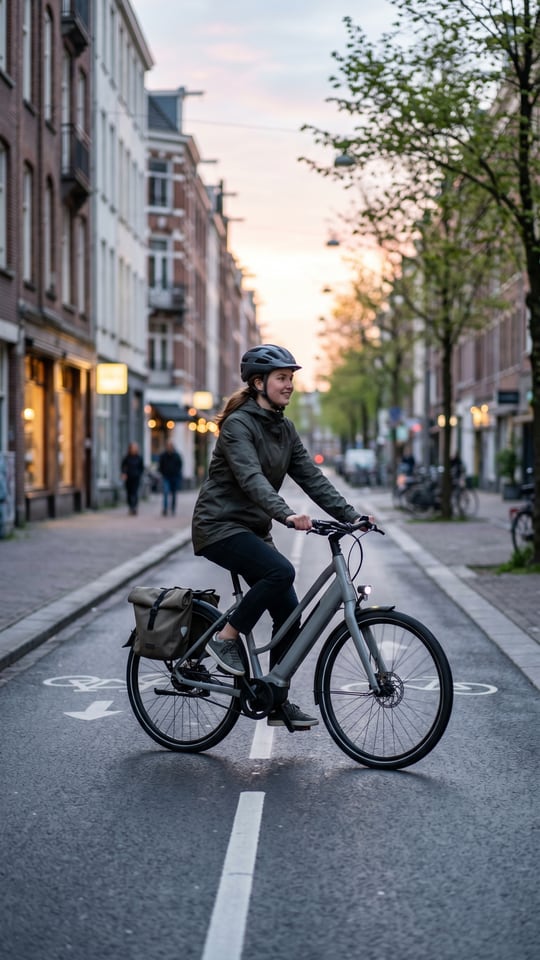
Heybike Cityscape 2.0
Best Overall Value · UL Certified · City Commuter
Heybike is one of the most established e-bike brands on Amazon, and the Cityscape 2.0 is the bike I'd point most riders to first. It's a safety-focused city build: a UL-certified electrical system and a 468Wh UL-certified removable battery you can pull out and charge indoors, with a manufacturer range claim of up to 50 miles per charge. The 500W motor (the listing advertises a ~1200W peak) is plenty for flat-to-rolling commutes, and it ships roughly 90% pre-assembled, so setup is quick. It's the cleanest "buy it and ride it" pick on Amazon.
✓ Pros
- Verified live Amazon listing — direct product page confirmed
- UL-certified electrical system and UL-certified removable battery
- 468Wh pack charges indoors; up to 50 mi manufacturer claim
- Ships ~90% pre-assembled — minimal setup
- One of Amazon's most established e-bike brands
✗ Cons
- Tuned for city/pavement, not serious off-road
- Price varies — confirm the live number before buying
- 500W continuous is modest on steep hills (peak ~1200W is short-burst)
Best Budget: Gotrax R2 Folding Commuter
Gotrax R2 20" Folding
Best Budget · Folding · 20" Knobby Tires
The Gotrax R2 is the cheapest credible way in — it consistently lands in the budget tier, well under $700. It's a 20" folding commuter that drops into a car trunk or RV: a 500W motor with a 20 mph top speed, a 48V 10.4Ah battery the brand rates at up to 55 miles of pedal-assist (about 22 miles on throttle alone), a Shimano 7-speed drivetrain, five PAS levels, a front suspension fork with lockout, dual disc brakes, a rear cargo rack, and an integrated headlight. The range claim is best-case, but for short commutes and easy storage, nothing here is cheaper.
✓ Pros
- Lowest entry price here — budget tier, well under $700
- Folds to fit a car trunk, RV, or small apartment
- Front suspension fork w/ lockout + dual disc brakes
- Up to 55 mi pedal-assist (mfr. best-case claim)
- Rear cargo rack and integrated LED headlight included
✗ Cons
- ASIN not page-verified — link goes to an Amazon search
- 20 mph max and a smaller 10.4Ah battery
- Throttle-only range (~22 mi) is much shorter than the PAS claim
Best Fat-Tire / All-Terrain: VELOWAVE 26"
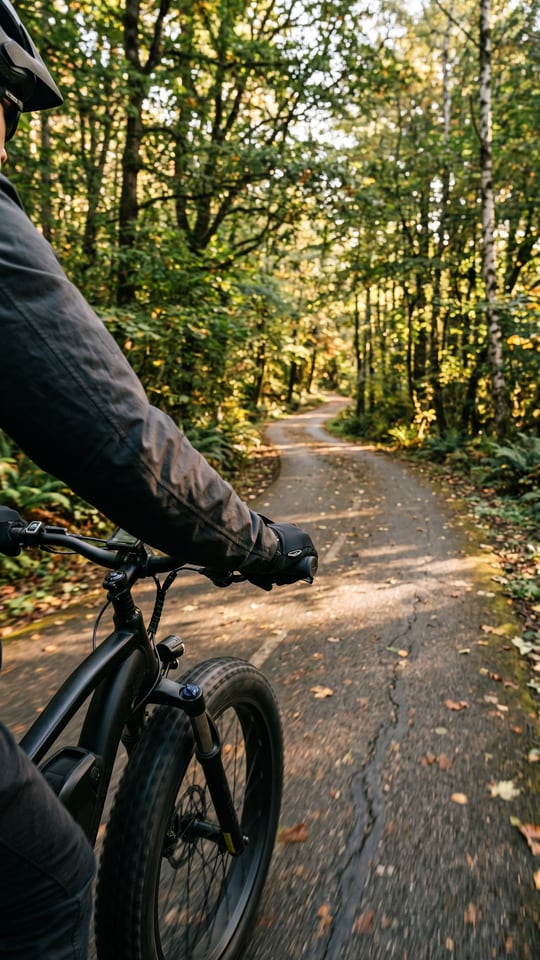
VELOWAVE 26" Fat Tire
Best Fat-Tire · Bafang Motor · LG Cells
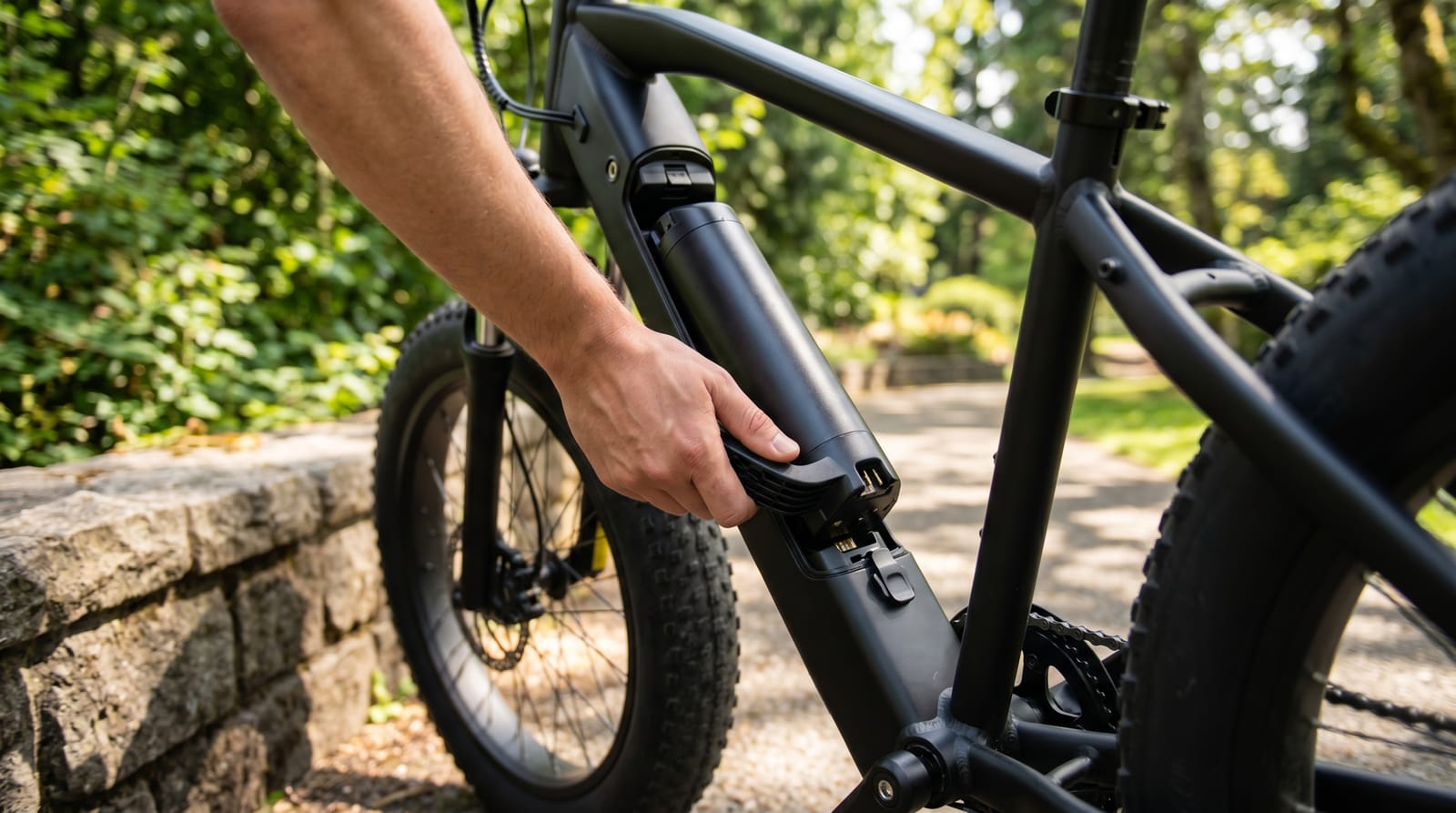
If your riding mixes pavement with gravel, sand, or snow, the Velowave 26" is the all-terrain pick. It runs a 750W Bafang rear hub motor (the listing advertises a ~1200W peak) good for a 28 mph Class-3 top speed, paired with a removable 48V 15Ah battery built on LG cells — a step up from the no-name cells common at this price. The 26" × 4.0" Kenda fat tires float over loose terrain, and a Shimano 7-speed drivetrain keeps the gearing simple. Brakes are mechanical disc rather than hydraulic, which is the main trade-off versus the flagship.
✓ Pros
- 750W Bafang motor — a respected, serviceable hub-motor brand
- Removable 48V 15Ah battery on quality LG cells
- 26" × 4" Kenda fat tires for sand, snow, and gravel
- 28 mph Class-3 capability
- Shimano 7-speed drivetrain
✗ Cons
- ASIN not page-verified — link goes to an Amazon search
- Mechanical (not hydraulic) disc brakes
- Heavy fat-tire build; price varies — confirm live
Premium Flagship: ENGWE Engine Pro
ENGWE Engine Pro
Premium Flagship · Folding · Full Suspension
The ENGWE Engine Pro is the flagship — the bike to buy if you want the most capability and don't mind spending in the $1,000–$1,500 tier. It pairs a 1000W motor (peak 1200W) with a 75Nm torque sensor, which gives a far more natural, responsive ride than the cadence assist on cheaper bikes. The large 52V 16Ah pack (~830Wh) backs up to a claimed 68–75 miles, and the bike runs 20" × 4.0" fat tires, full suspension, and hydraulic disc brakes. The 6061 aluminum frame folds for transport despite the ~70 lb weight and ~330 lb capacity; a UL-certified variant is listed. It's the closest thing here to a premium ride at a value price.
✓ Pros
- Torque sensor (75Nm) — natural, responsive assist vs. cadence
- Large 52V 16Ah (~830Wh) pack; up to 68–75 mi claimed
- Full suspension + hydraulic disc brakes
- Folds despite the fat-tire, ~330 lb-capacity build
- UL-certified variant available per listing
✗ Cons
- ASIN not page-verified — link goes to an Amazon search
- Heaviest and priciest pick here (~70 lb, $1,000–$1,500 tier)
- Folding a ~70 lb bike is awkward; price varies — confirm live
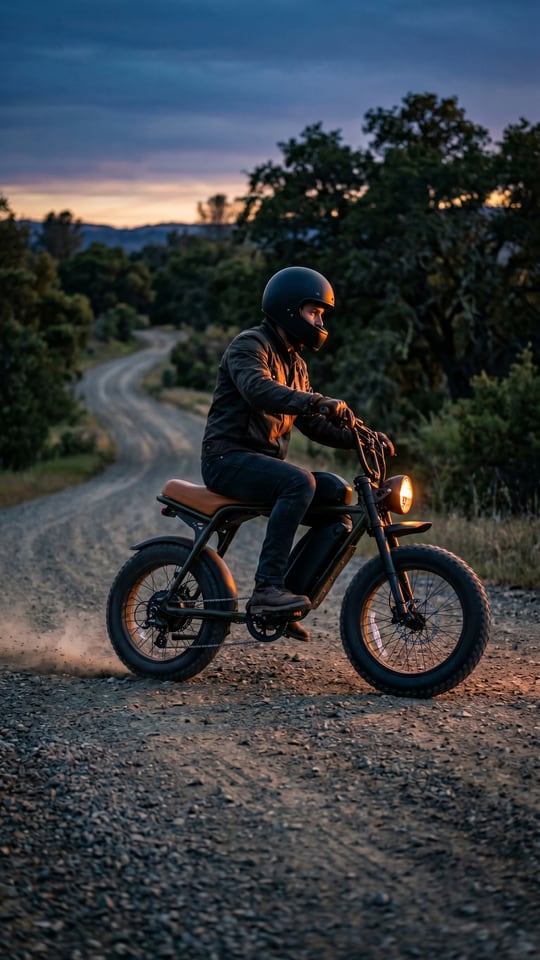
Best Trail: Heybike 27.5" Electric Mountain Bike

Heybike 27.5" Mountain
Best Trail · 27.5" Wheels · UL2849
For two-wheel trail riding without fat tires, the Heybike 27.5" electric mountain bike is the mid-tier pick. The larger 27.5" wheels roll faster and smoother over roots and gravel than 20" fat tires, a front suspension fork takes the edge off, and a 1200W peak motor pushes up to 28 mph. The 480Wh removable battery backs an up-to-50-mile manufacturer claim (expect roughly 31–40 miles in real mixed riding), and the listing notes a UL2849-certified electrical system. It's the lightest, most conventional "mountain bike that happens to be electric" option here.
✓ Pros
- 27.5" wheels roll faster and smoother than 20" fat tires
- 1200W peak motor, up to 28 mph
- 480Wh removable battery; UL2849 per listing
- Front suspension fork + Shimano 7-speed
- Conventional MTB layout — familiar to ride
✗ Cons
- ASIN not page-verified — link goes to an Amazon search
- Real-world range (~31–40 mi) well under the 50 mi claim
- Smaller battery than the flagship; price varies — confirm live
Pre-Ride Systems Check — How to Choose a Value E-Bike
| What to check | Why it matters |
|---|---|
| UL 2849 certification | The safety standard for the e-bike electrical system and battery. The Cityscape 2.0 and the Heybike 27.5" list certification explicitly, and a UL variant of the ENGWE exists — prioritize it and confirm on the live listing. |
| Removable battery + capacity (Wh) | Removable means you can charge indoors. Watt-hours predict range better than "miles" claims — 468–480Wh is solid for commuting, ~830Wh (ENGWE) is generous. Headline mileage is best-case; expect 40–60% in real use. |
| Motor: continuous vs. "peak" | Brands advertise a ~1200W "peak," but the continuous-rated motor is 500–1000W. Peak is short-burst for hills and starts. A torque sensor (ENGWE) feels far more natural than cadence assist. |
| Brakes | Disc brakes are essential on a 50–70 lb bike at 20–28 mph. Hydraulic (ENGWE) beats mechanical (Velowave, Gotrax) for stopping power and low maintenance. |
| Class / top speed | 20 mph (Class 2) vs. 28 mph (Class 3). Faster isn't always legal — check your local rules and trail signage. Many bikes ship speed-limited and can be unlocked in settings. |
| Listing confidence | Prefer a model with a verified, current Amazon listing. Where we couldn't page-verify the ASIN, we link to an Amazon search so you land on the real, live listing rather than a stale product ID. |
Frequently Asked Questions
For most riders, the Heybike Cityscape 2.0 is the best overall value e-bike you can actually buy on Amazon — it's a UL-certified city commuter with a 468Wh removable battery, an up-to-50-mile manufacturer range claim, and it ships about 90% pre-assembled, from one of the category's most established Amazon brands. If you want the cheapest credible way in, the Gotrax R2 folding bike (budget tier, under $700) is the budget pick. Prices fluctuate, so check the live Amazon listing for the current number.
Amazon's e-bike selection is dominated by value brands (Heybike, Velowave, ENGWE, Gotrax) rather than premium direct-to-consumer names like Rad Power or Aventon, which only sell on their own sites. The established value brands genuinely deliver removable batteries, 500–750W continuous (up to ~1200W peak) motors, fat tires, and Class-3 28 mph speeds. The honest trade-off versus a premium DTC bike (well into four figures) is less build polish, cadence-leaning assist on cheaper models, heavier weight, some self-assembly, and weaker dealer support. For the money, they punch above their weight.
Those brands sell direct-to-consumer through their own websites, not on Amazon. Since this guide only covers bikes you can buy on Amazon — with Prime shipping and Amazon's return policy — they're excluded. If you specifically want one of those brands, you'll need to buy from the manufacturer's own site.
Class 1 e-bikes assist up to 20 mph. Class 2 add a throttle up to 20 mph. Class 3 assist up to 28 mph. The bikes here range from 20 mph (Gotrax R2) up to 28–30 mph Class-3 capability (Velowave, ENGWE Engine Pro, Heybike YM1 mountain). Many ship in a lower-speed setting that can be unlocked in the display settings — always check your local class laws and trail rules.
Manufacturer range claims here run up to 50–75 miles, but those are best-case figures (lowest pedal-assist level, flat ground, light rider). Real-world mixed-terrain range is typically 40–60% of the headline number. Battery capacity (watt-hours) predicts range better than the mileage claim: the Cityscape 2.0 uses a 468Wh pack and the ENGWE Engine Pro a large 52V 16Ah (~830Wh) pack.
Brands like Velowave, ENGWE, and Heybike advertise a 'peak' wattage (often ~1200W) prominently, but the continuous-rated motor is lower — typically 500W to 1000W. Peak is a short-burst figure for hills and starts; continuous is what the motor sustains. We quote wattages as '(peak)' where that's the listed figure so you can compare honestly. Also look for UL 2849 certification (the e-bike electrical-system safety standard) on the live listing.
Sources & Methodology
This guide is built entirely around electric bikes sold on Amazon, so every pick ships with Prime and is covered by Amazon's return policy. Specifications and prices come from each product's Amazon listing and search results in June 2026 and will change over time — prices in particular fluctuate, so they're presented as approximate and the affiliate link shows the live number. Range and top-speed numbers are manufacturer best-case claims; real-world results are typically 40–60% of the headline. "Peak" wattages are marketing figures (continuous output is lower). Only the Heybike Cityscape 2.0 listing (ASIN B0GK24ZSTC) was confirmed by loading its live Amazon product page — it uses a direct product link. The other four ASINs surfaced from Amazon's own search results but could not be page-verified, so to stay honest they link to an Amazon search rather than an unconfirmed product ID. We intentionally exclude premium direct-to-consumer brands (Rad Power, Aventon, Ride1Up, Lectric) because they are not sold on Amazon. Always confirm the current price and specs on Amazon via the links above before buying.
Last updated: June 19, 2026. Lifestyle imagery is illustrative.